
KARACHI: Sindh Chief Minister Syed Murad Ali Shah on Wednesday inaugurated Pakistan’s first university-based Siemens Power Academy at NED University of Engineering and Technology, marking a major milestone in industry-academia collaboration and efforts to equip young engineers with practical skills and expertise in advanced technologies.
Established through a partnership between Siemens Pakistan and NED University, the academy is the first of its kind at an engineering university in Pakistan and becomes the 29th member of Siemens’ global Power Academy network, which operates across 28 countries.
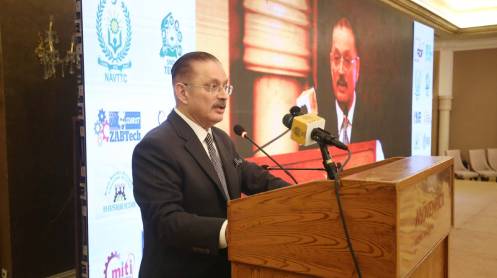
Addressing the inauguration ceremony as chief guest and keynote speaker, the chief minister said the initiative would help bridge the gap between academic learning and industrial practices, preparing graduates to meet the evolving demands of the global economy.
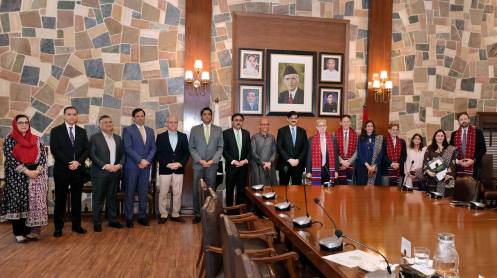
The ceremony was attended by German Consul General Thomas E. Schultze, Siemens Pakistan Managing Director and CEO Syed Muhammad Daniyal, Chairman of the Board Karl Stefan Werner, Siemens Middle East Managing Director of Electrification and Automation Paul Fairweather, NED Vice Chancellor Dr Muhammad Tufail Jokhio, industry representatives, faculty members and students.
Recalling his association with NED University, his alma mater, Murad Ali Shah said it was an honour to witness an initiative aimed at shaping the future of young engineers. Sharing his professional journey, he said he began his career as an engineer with WAPDA before working at Port Qasim, where he learned that engineering was not limited to classroom education or theoretical designs but required practical application, problem-solving and responsibility.
“That is precisely the kind of practical exposure I want our young people to receive during their university education,” he said.
Education must translate into skills and employment
The chief minister said Pakistan was a young nation, with approximately two-thirds of its population below the age of 30, according to the 2023 Census. University enrolment had increased from around 1.3 million students in 2014-15 to nearly two million in 2023-24.
He said the country had made considerable progress in expanding access to higher education, but its next challenge was to translate education into skills, skills into employment and knowledge into economic opportunities.
He emphasised that young people, including women from remote areas of rural Sindh, should have equal opportunities to pursue engineering education, acquire practical skills and build successful careers.
Achieving this goal required accessible and quality education, strong universities and industries willing to invest in young people by sharing their knowledge, experience and expertise, he added.
NED graduates making their mark internationally
Highlighting the achievements of NED graduates, Murad Ali Shah said the university had a proud tradition of producing engineers who had made significant contributions internationally.
He cited Syed Attique Shafaat, who contributed to the development of an NED solar-powered car that competed internationally in Australia and later led interior engineering work for the Honda CR-V at Honda of Canada Manufacturing.
He also mentioned NED graduate Shahid Ahmed Chisty, who contributed to the management of major energy projects associated with the refurbishment of Canada’s Darlington nuclear power station.
“These are inspiring examples of what Pakistani talent can achieve when it is given the right education, exposure and opportunities,” he said.
Engineering central to economic growth and energy transition
The chief minister said engineering was fundamental to national productivity, industrial competitiveness and economic growth, enabling industries to improve efficiency, adopt modern technologies, reduce costs and enhance production.
Referring to the contribution of overseas Pakistanis, he said the country had received a record $41.6 billion in workers’ remittances during the last financial year, supporting millions of families and strengthening foreign exchange reserves.
He stressed the need to develop an economy that offered rewarding opportunities at home while enabling skilled Pakistani professionals to compete successfully in international markets.
Welcoming the Siemens initiative, he urged other companies operating in Sindh to follow its example by partnering with universities, opening their facilities to students and providing young engineers opportunities to work on real-world industrial challenges before entering professional life.
He expressed pride that Pakistan had pioneered the university-based Siemens Power Academy model, with NED University becoming its first host institution, and hoped the initiative would inspire similar partnerships in other countries.
Siemens highlights investment in future engineering talent
Speaking at the ceremony, Siemens Pakistan Managing Director and CEO Syed Muhammad Daniyal described the chief minister’s participation as a reflection of his commitment to engineering and the professional development of young engineers.
He highlighted Germany’s longstanding partnership with Pakistan in engineering development and said Siemens had played an important role in powering the country’s industries. The establishment of the academy, he added, extended this commitment towards digitalisation, advanced technologies and the training of the next generation of engineers.
He said the initiative was designed not only to address current industrial requirements but also to prepare young professionals for future technological challenges.
Siemens Middle East Managing Director of Electrification and Automation Paul Fairweather said establishing the academy at NED had required sustained efforts and close cooperation between the university and Siemens.
Referring to the growing role of artificial intelligence, he said AI had become an essential part of the modern technological landscape, making it necessary for young engineers to understand and embrace digitalisation to remain relevant and competitive.
Highlighting global energy challenges, Fairweather said electrification was accelerating faster than electricity grids could expand, while energy resources were becoming increasingly critical.
He referred to projections that global electricity consumption could double by 2050, requiring a substantial expansion in renewable energy capacity. He also highlighted the role of electrification, energy efficiency and renewable energy in achieving more than half of the required carbon dioxide emission reductions by 2050.
He said the future energy ecosystem would depend on interconnected and digitally managed systems covering power generation, transmission and distribution, renewable energy, energy storage, microgrids, electric vehicle charging, buildings and data centres.
Fairweather said Siemens was strengthening its global innovation and manufacturing network through more than 20 factories, over 10 assembly workshops and 25 research and development locations, supported by its international Power Academy network.
Seven decades of Siemens engineering and manufacturing in Pakistan
In his presentation, Siemens Pakistan Head of Business Unit Electrification and Automation Muhammad Hashsham Haris highlighted the company’s longstanding association with Pakistan’s engineering and industrial development.
He recalled the historic cable-laying project connecting London, Karachi and Calcutta in 1870, followed by the establishment of Siemens’ office in Lahore in 1922. The company was incorporated as Siemens Pakistan Engineering Company Limited in 1953, while local switchboard manufacturing began in 1956-57.
He said Siemens had completed around seven decades of manufacturing in Pakistan, with its Karachi factory playing an important role in developing the country’s electrical equipment and switchgear manufacturing capabilities.
Presenting the academy’s vision under the theme “Powering the Future: Where Engineering Meets Impact”, Haris said the facility would expose students to modern electrification and automation technologies while connecting academic learning with practical industrial applications.
He described Pakistan’s inclusion in the Siemens Power Academy network as a significant achievement, with NED becoming the first engineering university in the country to host the academy.
NED welcomes industry-academia collaboration
NED Vice Chancellor Dr Muhammad Tufail Jokhio welcomed the establishment of the academy, describing it as an important step towards strengthening collaboration between universities and industry.
He said the partnership would make engineering education more practical, relevant and responsive to industrial requirements by providing students access to modern technologies, specialised training and industry expertise.
He added that the collaboration would strengthen NED’s commitment to producing graduates equipped with sound theoretical knowledge and the practical capabilities required by modern industries to contribute to Pakistan’s industrial growth and compete internationally.
German Consul General Thomas E. Schultze also addressed the gathering as guest of honour, highlighting the longstanding cooperation between Germany and Pakistan.
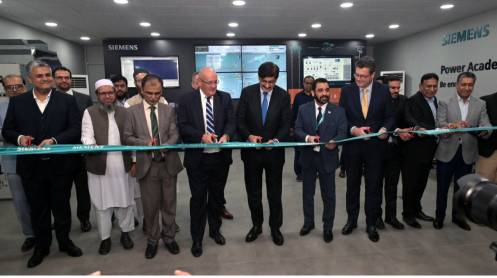
Earlier, the chief minister formally inaugurated the academy by cutting the ribbon at its training facility, where he was briefed on the digitally equipped learning environment and available facilities.
The programme began with the recitation of the Holy Quran and the national anthem, followed by the opening address by Siemens Pakistan Managing Director and CEO Syed Muhammad Daniyal and presentations by Siemens’ regional and local leadership.
Concluding his address, Murad Ali Shah urged students to make the most of the opportunity, remain curious and innovative, and pursue continuous learning.
“The future will belong to those who can combine knowledge with practical skills, creativity with discipline, and ambition with a sense of responsibility,” he said.
He expressed confidence that the Siemens Power Academy would help unlock the potential of Sindh’s youth while strengthening Pakistan’s engineering, technological and industrial capabilities.