ISLAMABAD: The government is planning to fully deregulate petrol prices by June 2027, while high-speed diesel (HSD) pricing would be deregulated at a later stage as part of a gradual shift towards a market-based petroleum pricing system.
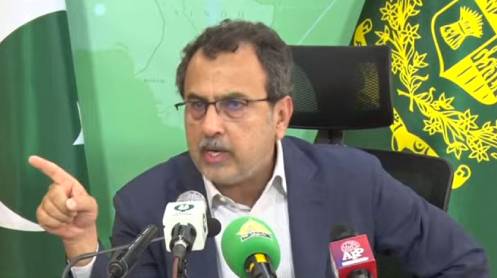
The decision was taken in principle at a meeting of the committee on petroleum pricing, chaired by Petroleum Minister Ali Pervaiz Malik. The committee also agreed to strengthen the existing pricing mechanism rather than immediately operationalise the recently established Petroleum Prices Stabilisation Fund (PPSF).
Under the proposed framework, the Oil and Gas Regulatory Authority (OGRA) would be empowered to intervene in HSD pricing under clearly defined rules if the diesel crack spread rises unusually. The regulator could adjust the crack spread within a prescribed floor-and-cap mechanism without repeatedly seeking federal cabinet approval.
The committee noted that the existing system of daily petroleum price adjustments had generally helped stabilise the market and reduced the need for a stabilisation fund, which could require additional taxation to finance.
A government-commissioned consultancy reportedly advised that maintaining adequate fuel stocks could provide greater price stability than intervention through a stabilisation fund, which could potentially distort market incentives.
Under the proposed first phase of deregulation, petrol prices would become fully market-based, similar to high-octane products such as 97 RON HOBC and 95 RON. Oil marketing companies (OMCs) would be able to adjust prices on a daily basis, with the new system targeted for implementation by June 2027.
For consumers, deregulation could result in more frequent changes in petrol prices and potentially different prices among OMCs as companies compete for market share. While competition could create opportunities for lower prices, consumers would also become more directly exposed to international oil prices and exchange-rate movements.
The government plans to consider complete deregulation of HSD pricing in a subsequent phase, allowing OMCs greater flexibility to determine prices in a competitive market.
The committee also reviewed the Inland Freight Equalisation Margin (IFEM) mechanism, which currently helps maintain uniform depot-stage petroleum prices across the country, and agreed on a revised methodology for its calculation. OGRA assured the committee that the IFEM audit for FY2025-26 would be completed by the end of 2026.
The committee further directed OGRA to submit recommendations regarding the consolidation and performance of existing OMCs, particularly their adoption of modern technologies and international best practices.
It also reviewed international experiences with petroleum price stabilisation funds and directed the relevant subcommittee to refine its proposals. In view of the planned deregulation, the committee concluded that maintaining adequate fuel reserves would be more appropriate than establishing a permanent stabilisation fund.
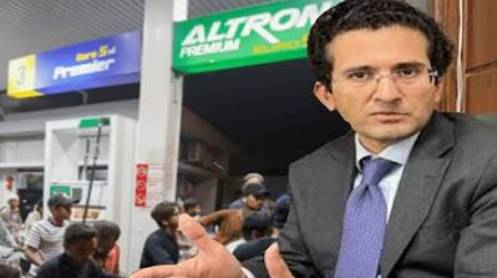
A subcommittee headed by NetSol’s Naeem Ghauri was also asked to consult FBR Chairman Rashid Langrial on whether the petroleum taxation regime should be reviewed in light of changing market conditions.
The Petroleum Division will submit the committee’s final recommendations to the prime minister for approval after further technical consultations, with the process expected to conclude within the next two or three meetings.
The government had notified the establishment of the PPSF in June amid sharp international oil-price fluctuations following US attacks on Iran. However, the fund has yet to receive any deposits, although the Finance Ministry has already established dedicated heads of account for it.
Story by Khaleeq Kiani