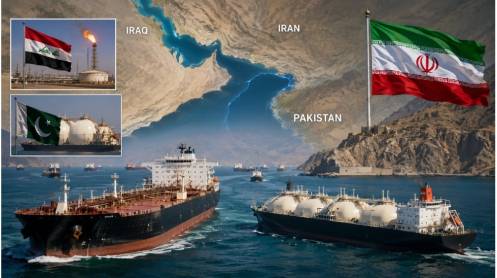
LONDON, UK: Iraq and Pakistan have reached separate arrangements with Iran to facilitate the movement of vital oil and liquefied natural gas (LNG) shipments through the Strait of Hormuz, underscoring Tehran’s growing influence over one of the world’s most critical energy chokepoints, Reuters reported.
Thank you for reading this post, don't forget to subscribe!The agreements come amid severe disruption to energy shipments following the U.S.-Israeli war with Iran, which has significantly reduced maritime traffic through the strategic waterway.
The Gulf region normally accounts for around 20 percent of global crude oil and LNG supplies, but fighting and restrictions around the Strait of Hormuz have sharply curtailed shipping activity.
Iran initially sought to halt shipping through the waterway but has increasingly shifted toward regulating which vessels are permitted to pass. Claudio Steuer of the Oxford Institute for Energy Studies described the development as a transition from blocking the strait to controlling access to it, effectively placing the route under Iranian oversight.
Iraq Seeks Safe Passage for Oil Tankers
Iraq has been particularly vulnerable to the disruption because a large share of its crude exports normally passes through the Strait of Hormuz.
Under an arrangement recently negotiated with Tehran, two very large crude carriers (VLCCs), each carrying approximately 2 million barrels of oil, were granted safe passage through the strait on Sunday.
An Iraqi oil ministry official familiar with the negotiations said Baghdad is seeking Iranian approval for additional tanker movements.
The development is critical for Iraq, where oil revenues account for approximately 95 percent of the government’s budget. Any prolonged disruption to crude exports could therefore place significant pressure on the country’s public finances.
Two Iraqi officials and a shipping industry source confirmed the discussions but requested anonymity because they were not authorized to speak publicly. An Iraqi government spokesperson did not immediately respond to requests for comment.
Pakistan Secures LNG Shipments
Pakistan has reached a separate understanding with Iran to facilitate LNG supplies.
Two tankers carrying Qatari LNG are currently travelling toward Pakistan under an arrangement between Islamabad and Tehran, according to Energy Now, citing two industry sources familiar with the discussions.
Pakistan had been receiving around 10 LNG cargoes per month before the conflict. Maintaining these supplies is particularly important as electricity demand rises during the summer months because of increased cooling requirements.
The sources said neither Iraq nor Pakistan has made direct payments to Iran or its Islamic Revolutionary Guard Corps (IRGC) in connection with the transit arrangements.
Qatar was not directly party to the agreements, although it reportedly notified the United States before the LNG shipments bound for Pakistan.
Pakistan’s petroleum and information ministries, along with Qatar’s foreign ministry, did not immediately respond to requests for comment.
Wider Implications for Global Energy Trade
The arrangements could establish a precedent as other energy-importing countries explore similar mechanisms to keep critical supplies moving amid prolonged disruption.
Rising fuel prices and shortages have placed particular pressure on Asian economies that depend heavily on Gulf energy supplies.
Saul Kavonic, head of research at consultancy MST Marquee, warned that broader acceptance of such arrangements could gradually normalize Iranian control over the Strait of Hormuz.
Before the conflict, around 3,000 vessels crossed the strait each month. Shipping data cited by Reuters indicates that traffic has since fallen to roughly 5 percent of normal levels.
The disruption has contributed to a sharp increase in energy prices, with Brent crude rising by more than 50 percent since the conflict began, while LNG prices in Europe and Asia have also climbed substantially.
Iran has indicated that it wants to retain control over the waterway after the war and has reportedly sought reparations, sanctions relief and access to frozen assets as part of any eventual settlement.
Iran Tightens Transit Requirements
Iranian authorities have reportedly required Iraq to provide detailed information on individual tankers—including ownership, cargo, destination and shipping details—before granting passage.
Iraqi officials are supplying the requested information in an effort to reduce the risk of incidents and secure continued access for its oil exports.
A Pakistani source involved in discussions with Tehran said negotiations have faced difficulties because Iranian authorities have occasionally changed their requirements. Nevertheless, talks are continuing as Islamabad seeks to protect its vital LNG supplies.
The developments highlight how the conflict has transformed the Strait of Hormuz from a major international shipping route into an increasingly contested strategic chokepoint, forcing energy-dependent countries to engage directly with Tehran to keep essential supplies moving.