LPG Auction Results Delayed Amid Legal Challenges, Policy Disputes
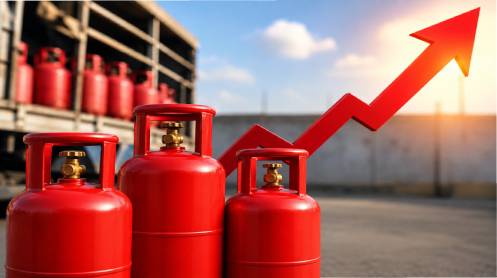
Thank you for reading this post, don't forget to subscribe!**ISLAMABAD:** The Petroleum Division has delayed the announcement of results from a recent auction of locally produced liquefied petroleum gas (LPG) amid legal challenges and policy disagreements, raising concerns that the new pricing mechanism could increase retail LPG prices by around **15 per cent** ahead of the winter season.
The auction, conducted on **August 10** by three major public-sector LPG producers, attracted a highest bid of **Rs205 million** for a five-tonne-per-day lot over a three-year period. The proposed auction mechanism was introduced on a pilot basis to replace the existing quota-based system with competitive bidding.
Pakistan’s annual LPG demand ranges between **1.4 million and 2 million tonnes**, with more than half of the requirement met through imports.
The bidding process has been challenged in court by some existing LPG stakeholders, who argue that the current policies and rules do not provide for such an auction arrangement. The Petroleum Division and relevant state-owned entities have reportedly held discussions with the Attorney General for Pakistan to seek an early resolution of the legal issues.
Under directives from Petroleum Minister **Ali Pervaiz Malik**, four public-sector entities — Oil and Gas Development Company Limited (OGDCL), Pakistan Petroleum Limited (PPL), Pak-Arab Refinery Company (Parco) and Government Holdings (Pvt) Ltd (GHPL) — were asked to offer standardised five-tonne-per-day LPG lots.
One tonne of LPG can fill approximately 85 domestic cylinders, meaning a five-tonne lot could supply around **425 cylinders per day**. Based on the highest bid, the signature bonus could translate into an additional cost of roughly **Rs440 per 11.8kg cylinder**, before the LPG marketing company adds its own margin.
The Oil and Gas Regulatory Authority (Ogra) has set the benchmark price of an 11.8kg LPG cylinder at **Rs3,000.93** for August. However, consumers in many areas are reportedly paying around **Rs3,600 or more**. Ogra also increased the LPG price by approximately **5.4pc**, or Rs12.89 per kg, to **Rs254.32 per kg** in August from Rs241.43 in July.
According to official records reviewed by *Dawn*, the highest signature-bonus bid for a five-tonne-per-day lot was Rs205m for three years, equivalent to around **Rs68.34m annually**. Petroleum Minister Malik subsequently directed the four producers to calculate their potential additional revenue from selling indigenous LPG through competitive bidding.
For PPL alone, the projected additional annual revenue was estimated at **Rs4-5 billion**. At the auction price, this would amount to around 66 lots, equivalent to nearly 28,000 cylinders a day and an estimated Rs440 additional cost per cylinder.
However, government officials are divided over whether the additional cost can legally be passed on to consumers.
Minutes of a July 20 meeting show that the petroleum minister directed that the **signature bonus should not be passed on to consumers**, with financial relief for vulnerable households to instead be provided through the Benazir Income Support Programme (BISP).
The Petroleum Division was also advised that maintaining separate LPG prices for vulnerable consumers could create market distortions and would be difficult to enforce. It was therefore proposed that LPG be sold at a single competitive market price, while targeted support for low-income consumers should be provided through fiscal intervention.
However, a mechanism for utilising the signature-bonus proceeds and a framework for fixing marketing margins have yet to be finalised, almost four weeks after they were ordered.
The issue is further complicated by the licensing conditions of LPG producers, which state that companies cannot charge any premium over the price notified by Ogra. Officials have therefore questioned whether the government can legally collect the billions of rupees projected through the auction process under the existing policy framework.
Ogra’s position has also added to the uncertainty. The regulator’s chairman reportedly told the petroleum minister that, following the suspension of Ogra’s 2018 order by the High Court, there was currently no legal restriction preventing producers from adopting competitive bidding, including a signature-bonus mechanism.
However, official records indicate that producers had previously hesitated to introduce such a system because of legal risks. PPL’s former managing director had faced contempt proceedings over an earlier tender involving signature bonuses, after which the company returned to a queue-based allocation system. Parco also warned of potential retrospective recovery if the 2018 Ogra decision against signature bonuses is ultimately upheld.
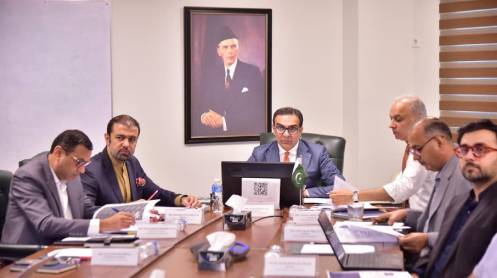
A subsequent government meeting on the issue failed to reach a conclusive decision. While the petroleum minister favoured introducing new policy directions through the **Economic Coordination Committee (ECC)** of the cabinet, other officials argued that such a move could conflict with the existing policy approved by the **Council of Common Interests (CCI)**.
The auction results therefore remain on hold as the government attempts to resolve the legal, regulatory and policy questions surrounding the new LPG pricing mechanism.
Story by Khaleeq Kiani