
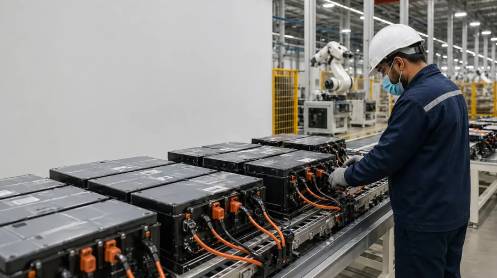
Pakistan imported more than 4.5 gigawatts (GW) of battery storage equipment during the first half of 2026, nearly half of the country’s cumulative historical imports of 9.5GW, according to a representative of the Pakistan Solar Association.
Thank you for reading this post, don't forget to subscribe!The rapid growth in battery energy storage adoption, driven by households and industrial consumers seeking affordable electricity, was discussed at a parliamentary dialogue organised by the Parliamentary Forum on Energy & Economy.
Participants highlighted the growing importance of Battery Energy Storage Systems (BESS) in improving grid stability, managing peak demand and reducing pressure on Pakistan’s electricity distribution infrastructure.
Syed Faizan Shah, adviser to the Power Division, announced that competitive tenders would be invited within 15 days for four pilot battery storage projects, each with a capacity of 10 megawatt-hours, in Lahore, Multan, Islamabad and Peshawar.
He also said NEPRA was designating battery storage as a regulated asset, potentially enabling distribution companies to address overloaded transformers without the higher costs of constructing new grid stations.
Industry representatives, however, raised concerns over high import duties and taxes, estimated at 35–40%, which are limiting affordability. A basic 5kWh battery reportedly costs more than Rs250,000.
The discussion also highlighted concerns about unregulated imports, battery safety standards, recycling infrastructure and the financial impact of increasing numbers of consumers shifting away from the national grid.
Participants emphasised the need for a transparent regulatory framework, competitive procurement, provincial consultation and long-term energy planning to ensure battery storage supports Pakistan’s energy transition while protecting industrial competitiveness and electricity consumers.