
ISLAMABAD: Prime Minister Shehbaz Sharif has rejected a proposal to auction liquefied petroleum gas (LPG) produced by state-owned enterprises (SOEs), citing the absence of a comprehensive legal, regulatory and policy framework.
An official told Dawn that the prime minister called for a comprehensive policy revision supported by appropriate legislation and regulations before any transaction could proceed, in order to avoid unnecessary controversy. He declined to approve interim arrangements, effectively halting the auction results of three major public-sector LPG producers announced on August 10.
Approval of the bidding results was estimated to increase LPG prices by at least 15 per cent, adding to seasonal winter price pressures. The proposal would have linked the producer price of locally produced LPG to import parity and increased the permitted margins for marketing companies and distributors. The estimated impact was Rs77,000 per tonne, equivalent to around Rs900 for an 11.8kg domestic cylinder.
LPG Supply Constraints Push Prices Above Official Rates
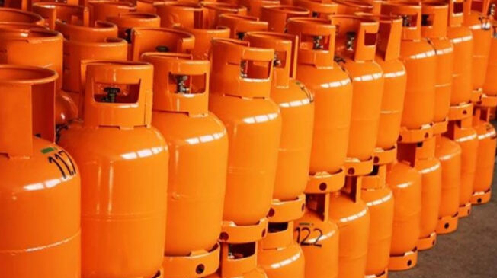
An 11.8kg LPG cylinder is reportedly selling for around Rs5,000, compared with the Oil and Gas Regulatory Authority’s (OGRA) notified maximum price of Rs3,296 — a difference of approximately 52 per cent.
Industry sources attribute the price surge to supply disruptions, import constraints and weak enforcement. LPG shipments through the Taftan border remain negligible, while more than 25,000 tonnes of LPG are reportedly awaiting clearance at Rahimdan, near Gwadar. Delays at the Gwadar terminal have extended the unloading and clearance process to about a month per bowser, pushing freight costs from $100 to $400 per tonne, according to industry officials.
The closure of the Strait of Hormuz has further restricted imports, leaving Oman as a key alternative supplier. Sources said the Foreign Office had approached Oman at the Petroleum Division’s request to explore LPG cargoes from state-owned OQ Trading. However, the available volumes were reportedly committed to a single private buyer on commercial terms, contributing to concerns over market shortages and price escalation.
Industry sources also said storage facilities at both LPG terminals at Port Qasim were operating at full capacity, raising questions about the extent of the reported shortage and the effectiveness of supply monitoring. Weak enforcement and the presence of loaded LPG bowsers parked in certain areas have added to concerns about market management and public safety.
Auction Plan Faces Legal Challenges
The three public-sector producers conducted simultaneous auctions on August 10 under directives from the Petroleum Division. The highest bidder reportedly offered Rs205 million for a lot supplied over three years, with each lot comprising five tonnes per day.
The country’s annual LPG requirement ranges from 1.4 million to two million tonnes, with more than half met through imports.
Some existing LPG market participants have challenged the auction process in court, arguing that prevailing policies and rules do not provide a legal basis for the proposed arrangement. The Petroleum Division and its entities have reportedly held meetings with the Attorney General for Pakistan to pursue the matter.
Under the plan directed by Petroleum Minister Ali Pervaiz Malik, four public-sector entities — Oil and Gas Development Company Ltd (OGDCL), Pakistan Petroleum Limited (PPL), Pak-Arab Refinery Company (PARCO) and Government Holdings (Private) Limited (GHPL) — were to offer standardised lots of five tonnes per day on a pilot basis, replacing the existing quota-based system.
The proposed signature bonus would have added nearly 15 per cent to the last OGRA-notified price of approximately Rs3,296 for an 11.8kg cylinder.
The prime minister’s decision means the proposed auction arrangement cannot proceed without a clearly defined legal and regulatory framework, leaving the government to address LPG supply disruptions, pricing concerns and the future structure of public-sector gas sales.
Story by Khaleeq Kiani