ISLAMABAD: The Punjab Power Development Company Limited (PPDCL) faced strong opposition from other power-sector entities and questions from the regulator on Tuesday over its request to increase electricity tariffs for three hydropower projects by more than Rs3 per unit.
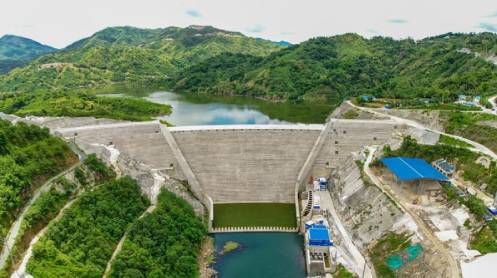
Thank you for reading this post, don't forget to subscribe!The National Electric Power Regulatory Authority (NEPRA) held a public hearing to examine PPDCL’s petition concerning the Chianwali, Marala and Pakpattan hydropower projects.
During the proceedings, the company stated that the existing total fixed charge stood at Rs7.4316 per kilowatt-hour (kWh), amounting to Rs371.54 million, and sought an increase to Rs10.9133 per kWh.
Representatives of Gujranwala Electric Power Company (GEPCO), Multan Electric Power Company (MEPCO) and the Central Power Purchasing Agency-Guarantee (CPPA-G) strongly opposed the proposed revision, warning that it would raise electricity costs for consumers and could encourage other hydropower producers to seek similar tariff adjustments.
PPDCL also requested a reduction in the plant factor and an increase in the assumed annual canal closure period from 20 to 34 days. The company explained that the initial estimate provided by Punjab authorities covered a 20-day canal closure but did not account for unscheduled closures.
Accordingly, PPDCL sought to reduce the annual energy generation benchmark from 49.995 gigawatt-hours (GWh) to 34.045 GWh.
Based on the engineering, procurement and construction (EPC) contractor’s design, the company proposed estimated annual generation of 43.067 GWh at a plant factor of 65.5%. However, NEPRA’s earlier determination had envisaged a benchmark of 49.995 GWh at a capacity factor of 75.5%.
The company argued that actual water flows and discharges were approximately 26% lower than the historical figures used in the feasibility study for the Marala hydropower project.
It further stated that the feasibility study and EPC contract design had not accounted for scheduled and forced outages. The feasibility study assumed 15 days of annual canal closure, while the EPC design provided for 20 days, compared with the actual closure period of 34 days.
After accounting for scheduled and forced outages, extended canal closures and reduced water flows, PPDCL estimated annual generation at 34.045 GWh, corresponding to a capacity factor of 51.4%. The company maintained that this benchmark remained considerably higher than that of run-of-canal hydropower stations operated by the Water and Power Development Authority (WAPDA).
PPDCL also sought permission to pass through insurance costs capped at 0.8% of the EPC cost, proposing to reduce the existing operational insurance cap from 1.35% to 0.8% or the actual cost, whichever is lower.
The company said it had reached an agreement with the power purchaser to reduce the insurance cap to 0.8% of the EPC cost. For comparison with actual insurance expenses, it proposed converting the capped amount of $0.2772 million into Pakistani rupees using the US dollar exchange rate applicable on the valuation date of the insurance coverage for the relevant year.
The petitioner also informed the regulator that it had agreed with the power purchaser to change the tariff structure from a take-or-pay arrangement to a take-and-pay mechanism, shifting the risks associated with minimum generation and hydrology from the buyer to the seller.
Under the proposed changes, all fixed and variable operation and maintenance (O&M) cost components, whether foreign or locally sourced, would be indexed annually to the National Consumer Price Index (NCPI).
PPDCL further proposed discontinuing upward US dollar indexation of the return on equity (RoE) from January 1, 2026, fixing the exchange rate at Rs280.55 per US dollar. Any appreciation of the Pakistani rupee would be passed on annually.
NEPRA will consider the company’s proposals alongside objections raised by other power-sector stakeholders before determining the matter.
Story by Zafar Bhutta