
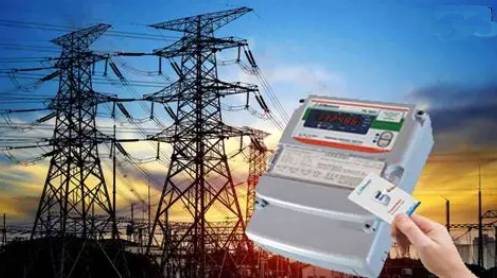
ISLAMABAD: The Private Power and Infrastructure Board (PPIB) has initiated consultations on a proposed $2.3 billion project to install 16.2 million Advanced Metering Infrastructure (AMI) electricity meters across five power distribution companies (Discos), amid concerns from the business community over project costs, payment guarantees and the potential financial burden on consumers.
Thank you for reading this post, don't forget to subscribe!The project envisages replacing single-phase electricity meters in Lahore Electric Supply Company (LESCO), Multan Electric Power Company (MEPCO), Peshawar Electric Supply Company (PESCO), Quetta Electric Supply Company (QESCO) and Hazara Electric Supply Company (HAZECO) through public-private partnerships (PPPs).
The Federation of Pakistan Chambers of Commerce and Industry (FPCCI) has strongly opposed the proposed framework, warning that consumers could collectively pay around Rs1.4 trillion over 12 years under an illustrative financing scenario, without sufficient evidence that the investment would generate commensurate savings through reduced electricity losses and improved bill recovery.
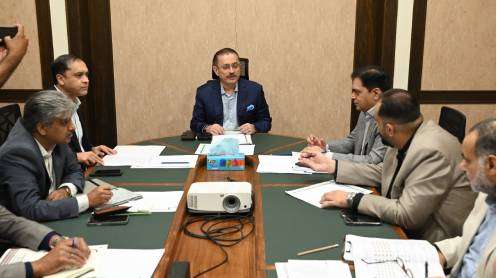
PPIB held a stakeholder consultation on Tuesday, chaired by its Acting Managing Director, Dr Munawar Iqbal Kamboh. A representative of the International Finance Corporation (IFC), a member of the World Bank Group, participated online and responded to participants’ questions.
During the meeting, participants were informed that the government had not yet finalised the technology for manufacturing the meters. Local manufacturing would be preferred, while international companies could partner with domestic investors to establish production facilities.
The proposed project would recover metering costs from single-phase consumers through electricity bills over a 12-year period. Participants were also informed that dollar indexation would not be involved, although FPCCI has raised concerns about foreign exchange indexation provisions contained in the draft guidelines.
The proposed payment mechanism would reportedly not link service payments to the collection performance of the relevant distribution companies, raising questions about whether project operators would be adequately incentivised to improve recoveries.
Representatives of distribution companies also expressed reservations about the consultation process, arguing that implementing entities had not been sufficiently involved in developing the framework.
A representative of Hyderabad Electric Supply Company (HESCO) reportedly criticised the approach, observing that national-level decisions were being made without adequately consulting those responsible for implementation.
Cybersecurity was another major concern. Participants stressed the importance of developing local technological capabilities to reduce the risk of security breaches and protect the electricity distribution network from external interference.
The IFC representative said local manufacturing would be encouraged, with international companies permitted to collaborate with domestic firms. Pakistan’s Power Information Technology Company (PITC) would also play a key role, while the AMI infrastructure would eventually be transferred to the relevant distribution companies after project completion.
The Privatisation Commission and the National Electric Power Regulatory Authority (NEPRA) have also been consulted, participants were informed.
Questions were raised about the effectiveness of smart meters in areas where consumers resist bill payments or use illegal electricity connections. Participants were told that specific measures would be introduced to address these challenges.
A pilot project is expected to be launched next month, while PPIB plans to organise additional consultation sessions in Karachi, Lahore and Islamabad.
FPCCI questions project economics
In written observations submitted to PPIB on October 13 regarding the draft Framework Guidelines for Deployment of Advanced Metering Infrastructure through Public-Private Partnerships, 2026, FPCCI called for the proposed framework to be suspended until an independent cost-benefit analysis is completed, published and subjected to regulatory and stakeholder scrutiny.
The Federation has questioned the proposed fixed monthly service payments for installed and communicating meters over a contractual period of up to 12 years. It argues that the arrangement could transfer investment and performance risks to consumers, even if the expected improvements in electricity distribution fail to materialise.
FPCCI has warned that the structure could replicate aspects of the capacity-payment model associated with independent power producers (IPPs), under which substantial payments remain payable regardless of actual performance or demand.
According to the Federation’s illustrative calculations, an assumed cost of Rs40,000 per meter for 16.2 million meters would result in an initial project investment of Rs648 billion.
If financed over 12 years at an assumed annual interest rate of 15%, the project could require annual payments of approximately Rs119.5 billion, equivalent to around Rs615 per meter per month. Total payments could reach approximately Rs1.4 trillion over the contractual period, excluding communications, software and operating expenses.
FPCCI clarified that these figures are illustrative estimates and do not constitute a final assessment of project costs.
It has urged the government to establish through independently verified calculations whether savings from lower distribution losses, improved bill recovery and avoided costs would exceed the total payments required from consumers.
Concerns over currency risks and tariffs
The Federation has also challenged the foreign exchange indexation provisions in the draft guidelines. Although service payments would be denominated in Pakistani rupees, the proposed framework reportedly allows foreign exchange indexation without specifying a ceiling on the indexed component.
FPCCI has called for payments to remain fixed in rupees, with bidders bearing currency risks through appropriate financing and hedging arrangements.
It has further objected to the proposed classification of service payments as pass-through, non-controllable costs that could be fully recovered through the relevant Disco’s tariff.
Instead, the Federation has argued that such expenditure should be accommodated within the distribution companies’ allowed margins under the Multi-Year Tariff (MYT), subject to prudence reviews and supported by improvements in operational efficiency.
Another point of contention is the proposed confidential benchmark price, under which bids at or below the benchmark could be considered reasonable and prudent. FPCCI wants the benchmark and its underlying assumptions disclosed when financial proposals are opened, followed by a public prudence review by NEPRA.
The Federation has also questioned proposed payment-security arrangements, including security over the entire Master Collection Account, potential government guarantees for Disco payment obligations and federal backing for termination payments.
It has asked PPIB to clarify how these payments would rank against existing power-purchase obligations.
FPCCI has also warned that allowing a regulated return on the same metering assets could lead to double recovery from consumers. It has called for the removal of provisions permitting such returns unless explicit safeguards prevent consumers from paying twice for the same investment.
Sovereign guarantees and privatisation risks
The proposed government guarantees and termination-payment commitments could create contingent liabilities for the federal government throughout the 12-year contract period, according to FPCCI.
The Federation has called for any sovereign support to be capped, properly approved and transparently priced, with associated fiscal costs disclosed.
It has further argued that distribution companies approved for privatisation should finance their own AMI investment programmes through plans reviewed by NEPRA. Under this approach, private owners would bear the investment and performance risks while benefiting from reduced electricity losses and improved recoveries.
FPCCI has cautioned that payment-security arrangements could remain in force even after a change in ownership, leaving long-term financial obligations attached to the distribution companies and potentially transferring the burden to consumers.
The Federation has also demanded safeguards to prevent project costs from being shifted to industrial consumers, K-Electric customers or consumers served by other distribution companies that do not directly benefit from the scheme.
It maintains that industrial consumers generally use three-phase meters and should not contribute to a programme focused on replacing single-phase meters in the five designated distribution companies. K-Electric, meanwhile, falls outside the proposed framework and operates under its own investment programme and NEPRA determinations.
Regulatory scrutiny sought before rollout
FPCCI has questioned the timing of the proposed guidelines in view of NEPRA’s pending proceedings concerning the prudence of distribution-sector investments, including review petitions relating to restrictions on high-cost feeders.
It argues that introducing a parallel cost-recovery mechanism before the regulator concludes these proceedings could undermine the existing regulatory framework and add to the power sector’s financial liabilities.
The Federation has urged PPIB not to issue a request for proposals until an independent cost-benefit analysis and the complete project cost are published, the benchmark price is disclosed, payments are linked to verified performance, and the framework is aligned with NEPRA’s formal determinations.
It has also called for the guidelines to remain on hold until NEPRA decides the pending review petitions and for any eventual implementation to proceed in phases.
The government has yet to finalise the project’s technology and procurement arrangements. Further consultations are expected in Karachi, Lahore and Islamabad, as stakeholders continue to debate the allocation of financial risks, local manufacturing, cybersecurity and the project’s potential benefits for electricity consumers.
Story by Mushtaq Ghumman