

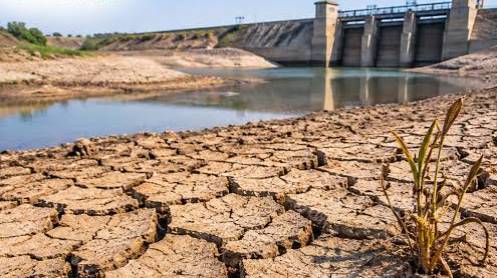
ISLAMABAD: Punjab is facing mounting water scarcity as demand has surpassed available supplies across all sectors, with groundwater reserves declining rapidly and surface water resources coming under increasing pressure, according to a comprehensive assessment by the United Nations Food and Agriculture Organisation (FAO).
Thank you for reading this post, don't forget to subscribe!The report, titled Water and Land Accounting in Punjab, estimates that the province is depleting its groundwater reserves by approximately 5.5 billion cubic metres annually, based on an assessment covering five water years between 2012 and 2017.
The assessment warns that growing water stress poses serious risks to agriculture, urban development and the province’s long-term economic sustainability, highlighting the urgent need for an integrated approach to water resource management.
The FAO consulted several water experts during the assessment, including former Water and Power Development Authority (Wapda) chairman Shamsul Mulk and former Indus River System Authority (Irsa) chairman Rao Irshad Ali Khan.
Punjab Needs Additional 10 Billion Cubic Metres of Water
The report estimates that Punjab requires an additional 10 billion cubic metres of usable water annually to bridge the widening gap between demand and supply while maintaining groundwater aquifer sustainability.
It warns that water shortages have become particularly severe in urban areas due to limited access to freshwater and declining groundwater reserves.
Agricultural production is also increasingly vulnerable to water stress, while freshwater shortages have encouraged greater reliance on recycled wastewater of inferior quality. Meanwhile, pollution from agricultural chemicals and urban wastewater is further deteriorating water resources.
The FAO stressed the need for timely interventions to increase surface water availability, improve groundwater recharge and develop provincial mechanisms for transferring water between seasons.
River Flows and Natural Water Resources Under Pressure
Highlighting the long-term decline in water resources, the report noted that river flows in Punjab had decreased by approximately 30 billion cubic metres following the 1960 Indus Waters Treaty with India.
The province has also experienced a significant reduction in its natural landscape, with wetlands accounting for only 1.7 per cent of its area.
Rainfall remains the only source of water in areas outside canal command regions and urban centres, while declining groundwater recharge has further reduced Punjab’s net renewable water resources.
The report also pointed out that Punjab’s canal irrigation system operates on a run-of-the-river basis for almost half the year, limiting its ability to draw its full authorised share of river water.
The decline in drainage flows further indicates a persistent imbalance between water availability and consumption.
FAO Recommends Provincial Water Commission
To address the growing crisis, the FAO has strongly recommended establishing a provincial commission to undertake a comprehensive, one-time review of Punjab’s water resources, related policies, institutional responsibilities and existing management strategies.
The proposed commission would ensure coordination between national and inter-provincial water policies and initiatives, while developing an integrated mechanism to evaluate the impacts of transboundary water projects and other interventions.
It would also identify overlapping institutional responsibilities, recommend changes to existing mandates and assess available water and land resources against current demand and projected requirements through 2050.
Additionally, the report proposed establishing a provincial coordination cell within the Planning and Development Department to oversee day-to-day coordination and implementation.
Four Major Challenges Identified
The FAO’s technical assessment identified four major challenges confronting Punjab’s water sector: increasing geographical and seasonal water scarcity; continuous depletion of groundwater reserves; growing competition among different sectors and unaccounted inter-sectoral water transfers; and the need to protect renewable water resources, wetlands and the province’s natural landscape.
The report also highlighted weaknesses in data collection and information management, recommending an expansion of the existing land-use classification system to cover the entire province.
Given Punjab’s substantial contribution to Pakistan’s national economy and agricultural output, the FAO warned that sustainable water management has become critical to ensuring food security, economic stability and the long-term availability of freshwater resources.
Story by Amin Ahmed