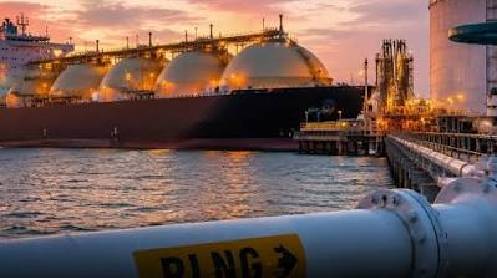
KARACHI: A vessel carrying around 82,000 tonnes of liquefied natural gas (LNG) from Qatar has arrived in Pakistan after transiting the Strait of Hormuz, marking the first Qatari LNG shipment to reach the country through the strategic waterway since July.
Thank you for reading this post, don't forget to subscribe!The vessel Al Marrouna, carrying LNG from Qatar’s Ras Laffan terminal, passed through the Strait of Hormuz on Monday and docked at the Engro LNG Terminal at Port Qasim on Thursday morning, according to Asad Altaf, a spokesman for the port.
The arrival marks the first Qatar-origin LNG cargo for Pakistan through the strait since July 11. Altaf said scheduled LNG shipments from Qatar had been disrupted due to the prevailing regional situation.
The latest shipment, procured by Pakistan under a government-to-government arrangement with Qatar, is expected to improve LNG availability and provide some temporary relief to the country’s power sector.
The arrival has also eased concerns over a prolonged disruption in Qatari LNG supplies, which remain critical to Pakistan’s energy security.
Pakistan and Qatar have been actively involved in diplomatic efforts to mediate between the United States and Iran, with the aim of bringing the two sides back to negotiations and de-escalating the ongoing regional conflict.
Pakistan is currently experiencing six to 12 hours of power outages in several areas amid elevated fuel prices and disruptions linked to the situation around the Strait of Hormuz.
The government has also introduced a daily fuel price mechanism in response to volatility in international crude oil markets, a move that has triggered protests from several political parties.
Energy stakeholders remain concerned that any further escalation of conflict in the Gulf could significantly disrupt Pakistan’s supplies of both crude oil and LNG, placing additional pressure on the country’s energy sector.
Pakistan has recently imported limited quantities of crude oil from the United States, but the longer shipping distance has contributed to higher transportation costs.
Meanwhile, rising fuel prices have increased production and logistics expenses, with goods transporters announcing a 10 per cent increase in freight charges, adding further pressure to inflation and the wider economy.