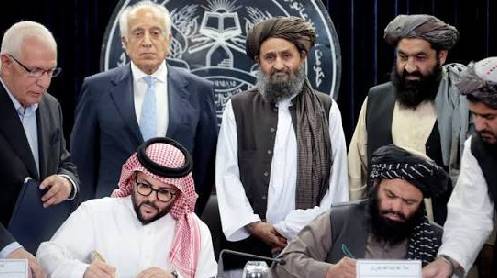
KABUL: Saudi Arabia-based Delta International Energy has signed a series of agreements with Afghanistan’s Ministry of Mines and Petroleum covering hydrocarbon exploration, natural-gas utilisation in Herat and a proposed 700-kilometre gas pipeline linking western Afghanistan with the Pakistan border.
The agreements, signed in Kabul on September 7, mark a potentially significant development in Afghanistan’s energy sector and could strengthen the country’s role as an energy corridor between Central Asia and South Asian markets.
However, the widely reported $50 billion figure should not be interpreted as an immediate investment commitment or Saudi government funding. The broader investment figure is a long-term potential programme that remains dependent on exploration results, technical and economic feasibility, financing, regulatory approvals and final investment decisions.
Exploration of Kushk–Tirpul Basin
Under the exploration and production-sharing agreement, Delta will undertake geological and geophysical studies, seismic surveys, exploration drilling and reservoir evaluation in the Kushk–Tirpul basin, located between Herat and Badghis provinces.
Afghan authorities say the basin covers around 22,000 square kilometres, while Delta has described the wider contract area as approximately 23,317 square kilometres. The Afghan government has stated that the initial exploration programme involves an investment of around $200 million and covers seven gas blocks.
The immediate objective is to establish the size, quality and commercial viability of the area’s hydrocarbon resources before larger development investments are considered.
Herat Gas Utilisation Plan
A separate agreement provides for Delta to finance a study into the utilisation of natural gas in and around Herat.
The study will examine potential gas supplies for Herat Industrial Park, Herat city, power generation and other industrial applications. If commercially viable gas resources are established, such infrastructure could potentially support industrial development and reduce reliance on imported or alternative fuels.
This element is particularly important because the economic value of domestic gas could extend beyond the extraction of hydrocarbons to electricity generation, industrial heat and manufacturing.
Proposed 700-Kilometre CentGas Pipeline
The third component involves a framework for studying a proposed 700-kilometre natural gas pipeline, described by Delta as “CentGas – Corridor of Prosperity.”
The proposed route would connect a gas-receiving point near Guzara in Herat province with a delivery point near Spin Boldak in Kandahar, close to the Pakistan border. The pipeline has been reported as potentially requiring around $10 billion in investment, subject to further studies and a final investment decision.
Delta itself describes CentGas as a proposed cross-border gas transmission corridor intended to connect Central Asian and other gas supplies through Afghanistan toward Pakistan.
A Name With Three Decades of History
The use of the CentGas name is particularly significant because it echoes the pipeline initiative developed during the 1990s.
At that time, Unocal and Saudi Delta Oil were among the companies involved in efforts to develop a pipeline carrying Turkmen gas through Afghanistan towards Pakistan. The original project ultimately failed to materialise amid Afghanistan’s conflict, political uncertainty and financing challenges.
The current proposal therefore represents a striking revival of an energy corridor concept that has been discussed for almost three decades.
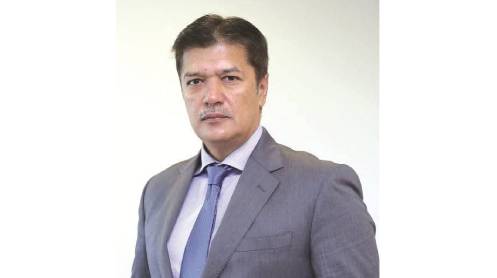
Former US Special Representative for Afghanistan Zalmay Khalilzad attended the September 7 signing ceremony. Afghan government sources confirmed his presence alongside Delta International CEO Shaher Al-Taqi and senior Afghan officials.
Khalilzad had also been associated with the original Afghan pipeline discussions in the 1990s, adding a notable historical dimension to the latest development.
From Resource Extraction to an Integrated Energy Corridor
The significance of the new agreements extends beyond exploration alone.
If commercially recoverable resources are confirmed, the proposed development could potentially connect three elements:
Afghan gas resources → domestic industrial and power demand → regional energy connectivity.
That model could provide greater economic value than simply extracting hydrocarbons for export.
Potential downstream applications could include electricity generation, industrial fuel, fertiliser production, cement, glass, manufacturing and other gas-intensive industries.
The key economic question will therefore be how much value can be created inside Afghanistan before gas reaches regional markets.
Link With TAPI and Regional Connectivity
The proposed CentGas corridor also comes as construction of the Turkmenistan–Afghanistan–Pakistan–India (TAPI) gas pipeline progresses inside Afghanistan.
Afghanistan’s Ministry of Mines and Petroleum reported in July that approximately 101 kilometres of TAPI pipeline had been laid, alongside substantial corridor preparation, road construction and trenching.
The two projects are formally separate, but their geographical and strategic implications overlap: both could strengthen Afghanistan’s role in regional energy transportation.
Earlier this year, Afghan officials said Delta International had expressed interest in purchasing Turkmen gas, supporting expansion of Turkmenistan’s Galkynysh gas field and developing a Guzara–Spin Boldak pipeline, with possible longer-term connections toward Pakistan and India. Discussions also reportedly included potential gas-related infrastructure at Gwadar.
Why the $50 Billion Figure Needs Context
The scale of the potential programme has attracted considerable attention.
Reports have cited a potential $50 billion investment over 25 years, while Delta has also discussed a broader programme that could reach approximately $60 billion over 10 years, depending on exploration results, technical and economic studies, financing and final investment decisions.
These figures should therefore be treated as potential long-term investment estimates rather than committed capital.
For context, the World Bank puts Afghanistan’s 2024 nominal GDP at approximately $17.78 billion.
Any investment approaching the headline figures would consequently be substantial relative to the size of Afghanistan’s economy. But the immediate, confirmed commitment is considerably smaller: the Afghan government says Delta’s initial exploration investment is approximately $200 million.
Afghanistan’s Emerging Energy Position
The developments point toward a potentially broader energy strategy in which Afghanistan could simultaneously become:
an upstream producer of hydrocarbons;
a domestic consumer of natural gas;
a transit corridor for Central Asian energy; and
a potential gateway toward Pakistan and wider South Asian markets.
The success of that strategy will depend on factors well beyond the signing of agreements.
Commercially recoverable reserves must first be established. Pipeline economics, financing, security, regulatory arrangements and cross-border agreements will also determine whether proposed infrastructure progresses from feasibility studies to construction.
For now, the most important development is not the headline $50 billion figure.
It is the emergence of an integrated energy concept linking Afghan exploration, Herat’s industrial demand, regional gas supplies and a proposed corridor toward Pakistan.
If the projects progress into actual drilling, production, pipelines and industrial development, Afghanistan’s geographic position could increasingly become an economic asset rather than simply a transit challenge.
The next milestones will be exploration results, feasibility studies, financing commitments and final investment decisions.
For Afghanistan, the real test will be whether today’s agreements translate into wells drilled, pipelines built, industries powered, employment created and regional energy trade put into operation.