LONDON: Saudi Arabia could run out of oil stocks available for export within days if it fails to restore operations on its major East-West pipeline to the Red Sea, potentially removing up to 4% of global oil supply from the market, according to Saudi oil buyers and traders.
A prolonged disruption would further tighten global oil supplies, which have already pushed fuel prices to record levels, intensified inflationary pressures and driven US bond yields to their highest levels since the 2008 financial crisis.
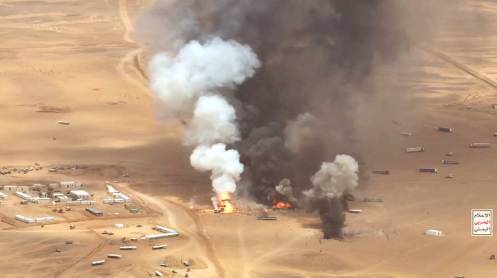
Drone attacks forced Saudi Arabia to shut the major pipeline on Friday. Riyadh has yet to disclose the full extent of the damage or provide a timeline for restoring the route.
Industry sources cited by Reuters gave differing estimates for repairs. One source said the damage could take five to six weeks to repair, while another said the pipeline could be restored sooner and may resume partial operations while repair work continues.
Saudi Arabia’s government media office and Energy Ministry did not immediately respond to requests for comment.
For the past six months, the pipeline has helped shield Saudi Arabia from the impact of the wartime disruption in the Strait of Hormuz, which has severely affected oil exports from neighbouring countries.
The East-West pipeline, which runs across the Arabian Peninsula, has allowed Saudi Arabia to divert around 4 million barrels per day (bpd) to the Red Sea port of Yanbu, equivalent to roughly 4% of global oil supply.
However, with the pipeline currently offline, Yanbu’s oil stocks are sufficient to sustain exports for only five to seven days, according to three industry sources familiar with Saudi export operations.
Saudi Arabia also has several days of stocks available at Egypt’s Ain Sukhna port on the Red Sea and Sidi Kerir on the Mediterranean coast, a fourth source said.
Yanbu has estimated storage capacity of around 35 million barrels, while Ain Sukhna and Sidi Kerir can hold approximately 18 million and 20 million barrels, respectively.
Industry sources said the storage facilities are not fully stocked and could ultimately be depleted if the East-West pipeline is not brought back into operation.
Saudi oil production has already fallen to its lowest level in more than three decades, with reduced flows through the Strait of Hormuz and the Red Sea contributing to the decline, the International Energy Agency (IEA) said on Friday.
The IEA estimates that global oil supply will fall by 5.7 million bpd, or around 6%, this year.
The pipeline attack comes amid broader security threats to oil shipments in the region. Houthi fighters in Yemen, who have previously threatened Saudi oil exports, also seized an island at the entrance to the Red Sea on Friday.
Before the war, the Middle East supplied around 22 million bpd of oil. Industry sources now estimate that flows through the Strait of Hormuz have fallen to between 6 million and 9 million bpd.
Saudi Arabia informed OPEC last week that its oil production had declined to around 6.2 million bpd in August, down sharply from 10.9 million bpd in February, before the start of the war.
By Reuters