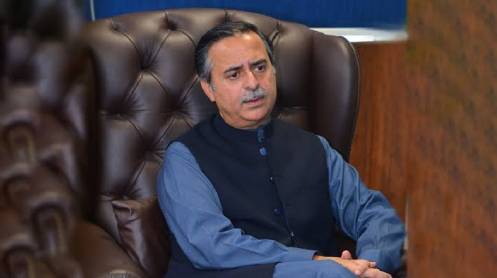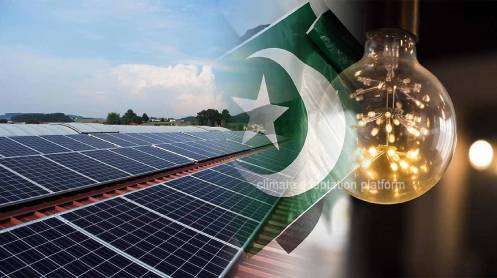
Pakistan has crossed a significant milestone in its clean energy transition, with solar power capacity reaching 8,000 megawatts, Federal Finance Minister Muhammad Aurangzeb announced during a panel discussion at Harvard University.
Highlighting the country’s progress, the minister reaffirmed the government’s commitment to increasing the share of renewable energy in the national power mix. He noted that despite global disruptions caused by recent Middle East tensions, Pakistan successfully maintained continuity in energy supply. He added that after an initial phase of subsidies, the government transitioned to a full price pass-through mechanism, supported by targeted relief measures.
Aurangzeb described Pakistan’s recent Eurobond repayment as a “non-event,” reflecting improved external confidence. He also pointed to record transit activity at Karachi Port and a surge in remittances through Roshan Digital Accounts in March, while cautioning that remittances cannot serve as a sustainable long-term solution.
Emphasizing the need for deep structural reforms, the minister identified tax system improvements as a key priority. He highlighted ongoing efforts to increase the tax-to-GDP ratio, alongside digitalization and automation within the Federal Board of Revenue. He also noted progress in tariff reforms and steps toward greater global economic integration.
The minister further shared that agricultural income tax legislation has now been enacted across all provinces, while 28 state-owned enterprises have been referred for privatization. Concluding his remarks, he underscored population growth and climate change as critical challenges, stressing that improving the overall business environment remains central to Pakistan’s economic agenda.