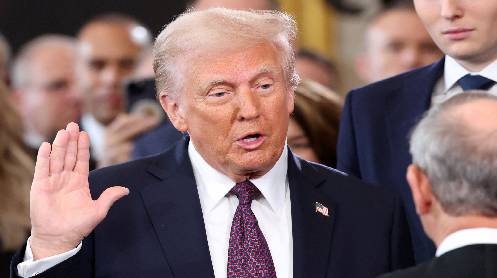
ISLAMABAD/WASHINGTON: Donald Trump has announced an extension of the ceasefire between the United States and Iran, citing a request from Pakistan’s leadership to allow more time for diplomacy.
In a statement posted on his Truth Social platform, Trump said the decision followed appeals from Shehbaz Sharif and Asim Munir to delay military action and give negotiations a chance. The ceasefire, initially set to expire this week, will now remain in place until Iran presents a “unified proposal” and talks are concluded.
“I have directed our military to continue the blockade and remain ready, while extending the ceasefire until such time as Iran submits its proposal,” Trump stated.
The development comes as a Pakistan-brokered truce, agreed earlier this month, approached its deadline. While Trump had earlier indicated he would not prolong the ceasefire beyond Wednesday, he ultimately agreed to extend it, reflecting ongoing diplomatic efforts.
Prime Minister Shehbaz Sharif welcomed the move, thanking Trump for accommodating Pakistan’s request. He reaffirmed Islamabad’s commitment to facilitating dialogue and expressed hope that both sides would maintain restraint and work toward a comprehensive peace agreement during the next round of talks scheduled in Islamabad.
Pakistan has positioned itself as a key mediator in the crisis, which began after US-Israeli strikes on Iran on February 28 and has since escalated into a broader regional conflict impacting global energy markets.
However, uncertainty continues to surround the proposed second round of talks. Iran has yet to confirm its participation, with its foreign ministry questioning Washington’s intentions and citing recent US actions — including naval operations against Iranian vessels — as contradictory to the spirit of negotiations.
Iranian spokesperson Esmaeil Baghaei criticised US measures as “provocative” and raised concerns over continued pressure, while officials in Tehran have pointed to alleged ceasefire violations.
Meanwhile, Pakistan’s Deputy Prime Minister and Foreign Minister Ishaq Dar has urged both Washington and Tehran to extend the ceasefire further and prioritise dialogue as the only viable path to lasting peace.
A planned visit by US Vice President JD Vance to Islamabad for the talks has also been delayed, adding to uncertainty around the negotiations.
Tensions remain high in the region, particularly around the Strait of Hormuz, a critical global energy route. Disputes over maritime security, sanctions enforcement, and Iran’s nuclear programme continue to be major sticking points in the negotiations.
Despite the fragile situation, Pakistan continues its diplomatic engagement with both sides, aiming to bring them back to the negotiating table and avert further escalation in an already volatile Middle East.
Story by News Desk AFP Reuters