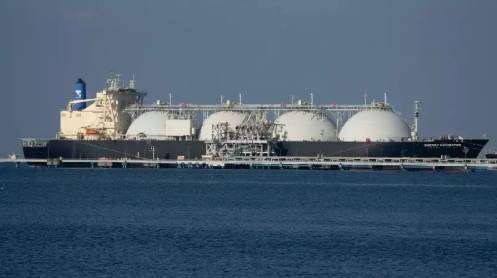
ISLAMABAD: Pakistan on Thursday rejected the two lowest evaluated bids for liquefied natural gas (LNG) cargoes submitted by BP Singapore and TotalEnergies, despite ongoing concerns over power shortages and rising summer demand.
According to official details, state-owned Pakistan LNG Limited (PLL) received seven bids against emergency tenders floated earlier this week for two LNG cargoes scheduled for delivery between May 12-14 and May 24-26.
For the first delivery window, BP Singapore offered LNG at $17.28 per million British thermal units (mmBtu), while PetroChina quoted $17.69 and Vitol Bahrain submitted a bid of $17.84 per mmBtu.
For the second cargo, TotalEnergies offered the lowest price at $16.98 per mmBtu, followed by SOCAR Trading at $17.21, PetroChina International at $17.49, and OQ Trading at $18.58 per mmBtu.
Despite the comparatively lower rates, PLL rejected the bids as authorities continued to monitor developments surrounding the Gulf crisis and the reopening of the Strait of Hormuz, a critical route for global LNG supplies.
The emergency tenders were issued on a 36-hour notice after the government anticipated some easing in regional tensions and hoped for the restoration of normal shipping activity through the Gulf.
Last month, PLL had also rejected two LNG bids for similar delivery windows while accepting another offer at $18.4 per mmBtu after securing relatively cheaper proposals.
Pakistan’s long-term LNG supplier, Qatar, had earlier shown reluctance in dispatching cargoes stranded in Gulf waters following heightened security concerns. Three LNG shipments destined for Pakistan reportedly returned from the Strait of Hormuz due to regional instability.
The supply disruptions came after escalating tensions triggered by US-Israel attacks on Iran, followed by retaliatory strikes targeting fuel installations in Qatar, Saudi Arabia, the UAE, and Kuwait. Subsequently, Qatar declared force majeure on its global LNG contracts, including supplies committed to Pakistan.
Meanwhile, the Oil and Gas Regulatory Authority (Ogra) increased regasified liquefied natural gas (RLNG) prices by 19 to 22 per cent in April, pushing consumer-end prices to around $12.50-$14 per mmBtu.
The increase was attributed primarily to lower LNG import volumes and higher terminal charges. Data showed that Pakistan imported only two LNG cargoes in March compared to eight cargoes in previous months due to the ongoing supply disruptions.
The two cargoes imported under agreements between Pakistan State Oil (PSO) and QatarGas averaged approximately $7.68 per mmBtu, slightly higher than the previous month but still considerably lower than international spot market prices.
PLL, established nearly a decade ago to handle LNG imports, has remained largely inactive over the past year, importing only one cargo through an older private-sector contract after a gap of almost 12 months.
The company has faced criticism for failing to secure timely LNG supplies despite mounting energy demand and ongoing loadshedding concerns ahead of the peak summer season.
Last week, Pakistan’s Power Division directed the Petroleum Division to arrange approximately 400 million cubic feet per day (mmcfd) of LNG to support electricity generation and stabilise the national grid during the summer months.
Story by Khaleeq Kiani