Abu Dhabi, UAE: Solar and wind energy combined with battery storage are now capable of delivering reliable, round-the-clock electricity at lower costs than fossil fuel-based generation in prime resource regions, according to a new report by the International Renewable Energy Agency (IRENA).
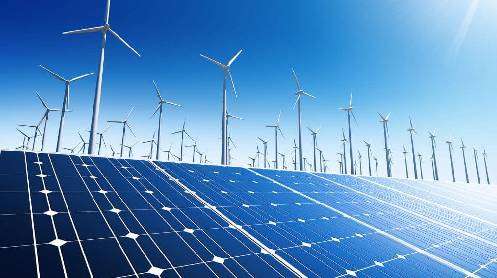
The report, titled 24/7 Renewables: The Economics of Firm Solar and Wind, concludes that hybrid renewable systems—particularly solar and wind paired with storage—are increasingly becoming the most cost-effective solution for continuous power supply.
Renewables reach fossil fuel parity and beyond
IRENA’s analysis shows that firm levelised costs of electricity (firm LCOE) for solar-plus-storage systems now range between USD 54 and 82 per megawatt-hour (MWh) in high-quality solar regions. This compares favorably with USD 70–85 per MWh for new coal in China, and over USD 100 per MWh for new gas-fired power globally.
Wind-plus-storage systems are also showing strong competitiveness, with costs ranging from USD 59 to 94 per MWh depending on location, and expected to decline further by 2030.
Global leadership sees shift in energy economics
Commenting on the findings, UN Secretary-General António Guterres said the global energy crisis has exposed the “true cost of fossil fuel dependence” and emphasized that renewable energy is now the most affordable and secure option.
He urged faster investment in clean energy infrastructure and stronger international cooperation to accelerate the transition to renewable power systems.
Meanwhile, Francesco La Camera highlighted that the long-standing argument about renewable intermittency is no longer valid.
He noted that advances in battery storage and system integration now enable renewables to deliver stable, uninterrupted electricity, even for demanding users such as data centres and artificial intelligence infrastructure.
Rapid cost declines across solar, wind, and storage
The report highlights dramatic cost reductions since 2010:
- Solar PV costs have fallen by 87%
- Onshore wind costs have declined by 55%
- Battery storage costs have dropped by 93%
These declines are making hybrid systems increasingly competitive, particularly in regions with strong solar irradiation and wind corridors.
Real-world examples and future outlook
IRENA points to projects like the UAE’s Al Dhafra solar complex, which integrates solar PV with battery storage to deliver around 1 GW of firm clean electricity at approximately USD 70 per MWh, as a real-world example of scalable 24/7 renewable power.
The report also projects further cost reductions:
- Around 30% decline by 2030
- Up to 40% decline by 2035
- Potential firm costs below USD 50 per MWh in top-performing regions
A structural shift in global power markets
According to IRENA, the economics of energy systems are undergoing a structural transformation. As solar, wind, and storage costs fall simultaneously, hybrid renewable systems are becoming increasingly dominant in new power generation investment decisions.
The agency concludes that 24/7 renewable energy is not a future concept but an emerging global standard—reshaping how countries plan energy security, industrial supply chains, and long-term climate strategies.