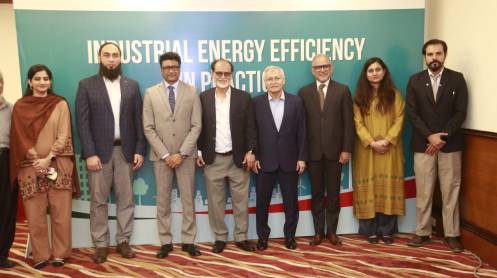
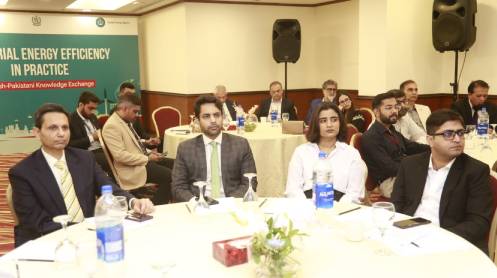
KARACHI: The Royal Danish Embassy in Pakistan and the Danish Energy Agency have brought together industry leaders, government representatives, financial institutions, technology providers and environmental organisations in Karachi to explore practical ways to accelerate industrial energy efficiency in Pakistan.
The knowledge exchange, titled “Industrial Energy Efficiency in Practice: Danish-Pakistani Knowledge Exchange,” focused on translating energy-efficiency policies into tangible industrial investments that can reduce energy consumption, lower operating costs, improve productivity and strengthen the competitiveness of Pakistani manufacturers.
Addressing the participants, Danish Ambassador to Pakistan H.E. Mrs. Maja Derrous Mortensen highlighted that energy efficiency has become an increasingly important business priority, with direct implications for industrial competitiveness, energy security and environmental sustainability. She emphasised the importance of knowledge sharing and stronger cooperation to translate joint efforts into practical results.
Denmark has extensive experience in combining effective energy-efficiency policies, technological innovation, systematic energy management and collaboration between government and industry. The event provided a platform to share Danish expertise and examine how successful approaches could be adapted to Pakistan’s industrial and economic landscape.
The programme featured presentations on Denmark’s experience in industrial energy efficiency, Pakistan’s institutional and regulatory framework, and technology solutions and success stories from industry.
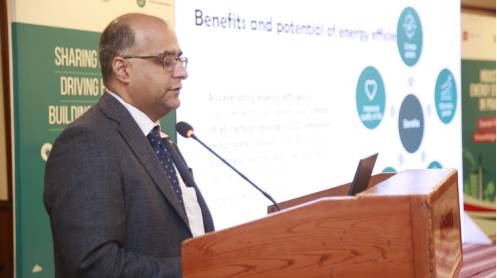
Mr. Nadeem Niwaz, Special Advisor, Centre for Global Cooperation at the Danish Energy Agency, presented Denmark’s experience and the Pakistan-Denmark Strategic Sector Cooperation in Energy, highlighting lessons and approaches relevant to Pakistan’s industrial sector.
Representing Pakistan’s perspective, Mr. Asif Zulfiqar, Assistant Director at the Sindh Energy Efficiency and Conservation Authority (SEECA), outlined ongoing initiatives, emerging opportunities and the institutional and regulatory challenges involved in accelerating industrial energy efficiency.
Mr. Saad Bin Emad, Country Manager for Grundfos in Pakistan, shared practical technology solutions and industrial success stories, demonstrating how improvements in pumps, motors, process systems and energy management can deliver measurable energy savings and reduce operating costs.
A key feature of the event was an interactive panel discussion titled “Barriers, Opportunities and Next Steps for Pakistani Industry,” which examined the challenges of translating energy audits and feasibility studies into actual energy-efficiency investments.
The panel brought together representatives from the textile industry, public sector, financial institutions, environmental organisations and technology providers. Participants included Mr. Salahuddin Rahman, Technical Director, Gul Ahmed; Mr. Asif Zulfiqar, Assistant Director, SEECA; Ms. Uzma Mansoor, Joint Director, SME, Housing & Sustainable Finance Department, State Bank of Pakistan; Ms. Mehak Sikander, Manager, Water Stewardship & Replenishment – South Region, WWF-Pakistan; and Mr. Saad Bin Emad, Country Manager for Grundfos in Pakistan.
The discussion identified several barriers to wider adoption of energy-efficiency measures, including limited access to financing, concerns over investment payback periods, gaps in technical capacity, challenges in regulatory implementation, and the need for reliable measurement and verification of energy savings. Panellists stressed that closer coordination among industry, government, financial institutions and technology providers would be essential to overcome these challenges.
The role of the financial sector received particular attention, with participants exploring ways to expand financing for industrial energy-efficiency projects through sustainable-finance frameworks, risk-sharing mechanisms, standardised energy audits, credible verification of savings and equipment-based financing. The discussion also highlighted initiatives by the State Bank of Pakistan to support businesses in improving energy efficiency and sustainability, alongside the need to make these financing and support mechanisms more accessible, particularly to small and medium-sized enterprises (SMEs).
The participants also discussed the growing importance of carbon emissions and international environmental requirements for Pakistani exporters, particularly the textile sector. Against the backdrop of the European Union’s Carbon Border Adjustment Mechanism (CBAM) and evolving sustainability expectations in global markets, reducing energy consumption and the carbon intensity of production was identified as increasingly important for maintaining export competitiveness and market access.
Speakers noted that energy-efficiency investments can deliver benefits beyond immediate reductions in energy bills. By improving resource productivity, reducing greenhouse-gas emissions and strengthening environmental performance, manufacturers can also enhance the sustainability of their supply chains and respond more effectively to environmental, social and governance (ESG) expectations and carbon-related requirements in international markets.
Participants further emphasised the importance of documenting successful industrial projects and sharing credible information on investment costs, energy savings and payback periods. Wider access to evidence-based results could help manufacturers assess investment opportunities, build confidence in proven technologies and replicate successful solutions across industrial sectors.
From an environmental perspective, energy efficiency was recognised as a practical means of reducing emissions, improving resource utilisation and supporting more sustainable industrial development. Measures such as installing efficient motors and pumps, upgrading heating and cooling systems, optimising industrial processes, improving compressed-air systems and strengthening energy-management practices offer significant opportunities to improve industrial energy performance.
The event also highlighted the potential to deepen Danish-Pakistani cooperation through technology transfer, technical partnerships, knowledge exchange, capacity building, project development and collaboration with financial institutions to mobilise investment in energy-efficient technologies.
The discussions concluded with a shared recognition that accelerating industrial energy efficiency requires a coordinated, multi-stakeholder approach involving industry, government agencies, financial institutions, technology providers, development partners and environmental organisations.
The Royal Danish Embassy and the Danish Energy Agency reaffirmed their interest in continued engagement with Pakistani stakeholders to exchange expertise and identify practical opportunities for cooperation, helping transform the country’s industrial energy-efficiency potential into tangible investments, lower production costs and improved industrial competitiveness.