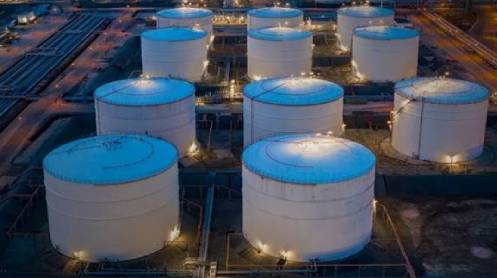
LAHORE: Pakistan is moving to establish its first commercial bonded oil storage system, allowing Gulf producers and international commodity traders to store petroleum products in the country for onward export while giving the government access to a portion of the stocks during emergencies.
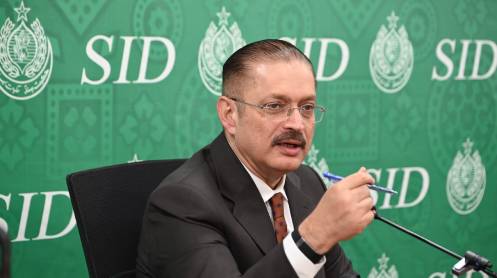
Federal Minister for Petroleum Ali Pervaiz Malik said the proposal, aimed at positioning Pakistan as a regional oil storage and distribution hub and strengthening fuel security, would be presented to the Economic Coordination Committee (ECC) for approval.
Speaking at a roundtable titled “From State Control to Competition: Rethinking Pakistan’s Energy Sector,” organised by the Business Recorder Forum, the minister said Pakistan currently lacked a dedicated national strategic petroleum reserve and relied entirely on commercial stocks in the event of major disruptions to global supplies.
Under existing regulations, refineries are required to maintain crude oil stocks equivalent to five to seven days of supply, while oil marketing companies (OMCs) must maintain refined petroleum stocks for 20 to 25 days.
Malik also outlined the government’s broader plans to reform the gas sector, including deregulation, restructuring and unbundling of the Sui companies and a gradual move towards a single market-clearing gas price. The reform roadmap is being developed with technical assistance from the World Bank.
He said proposals to separate the transmission, distribution and energy businesses of Sui Northern Gas Pipelines Limited (SNGPL) and Sui Southern Gas Company Limited (SSGCL) had been discussed with World Bank officials. The reforms are intended to create a more competitive gas market, with the Oil and Gas Regulatory Authority (OGRA) taking a stronger role in regulation and oversight.
Regarding LNG supplies, the minister said Pakistan would continue coordination with Qatar to ensure uninterrupted deliveries while efforts were underway to secure additional gas supplies to meet domestic demand.
On the issue of circular debt, Malik said the government was working to contain the accumulation without increasing tariffs. He added that discussions with the International Monetary Fund (IMF) were continuing and a resolution mechanism was expected following the arrival of the next IMF mission.
The minister further announced plans to replace the existing LPG quota system with a competitive bidding mechanism to improve transparency. Five-tonne lots have already been introduced on a pilot basis.
Calling for greater efficiency in the oil marketing sector, Malik said deregulation should be implemented through clear targets and milestones. He also urged OMCs to take responsibility for the end-to-end digitalisation of the petroleum supply chain.
He added that Pakistan was reviving offshore oil and gas exploration after nearly two decades, with friendly countries and domestic companies including Mari Petroleum, Pakistan Petroleum Limited (PPL) and Oil and Gas Development Company Limited (OGDCL) participating in the initiative.
During the forum, Chaudhry Muhammad Waheed, Chairman of the Pakistan Ethanol Manufacturers Association (PEMA), said discussions with government officials, including Deputy Prime Minister Ishaq Dar, had focused on developing the domestic ethanol industry and fuel-blending policy.
He said both sides had agreed that voluntary ethanol blending should be permitted, provided the policy remained financially viable for both refineries and ethanol producers.
Dr Naveed Arshad, a professor at the Lahore University of Management Sciences, warned that Pakistan could continue facing recurring energy crises without a clear long-term strategy. He stressed the need to reduce dependence on imported oil and gas and called for greater coordination between the Petroleum and Power divisions.
Arshad advocated evaluating energy policies on the basis of total system costs across the value chain and shifting suitable consumer demand towards electricity while diversifying power generation to reduce dependence on imported fuels.
He also highlighted the growing importance of battery energy storage systems (BESS), saying the technology could significantly transform the power sector and has numerous potential applications across the energy value chain.
HUBCO Chief Executive Officer Kamran Kamal said the power sector continued to face major challenges, including circular debt, high electricity tariffs and outdated transmission infrastructure that restricted the use of cheaper fuels.
Meanwhile, Muhammad Kashif, CFO of Associated Group, called for gas sector deregulation and greater private-sector participation in LNG imports to secure more competitive supplies.
Salman Saleem, Country Head of ZIC Oil, highlighted financial and operational pressures facing OMCs, including delayed margin revisions, policy uncertainty and liquidity constraints.
FESCO Director Adil Bashir and Kixx Oil Managing Director also shared their views on challenges and reforms needed across Pakistan’s energy sector.
Story by Hassan Abbas